
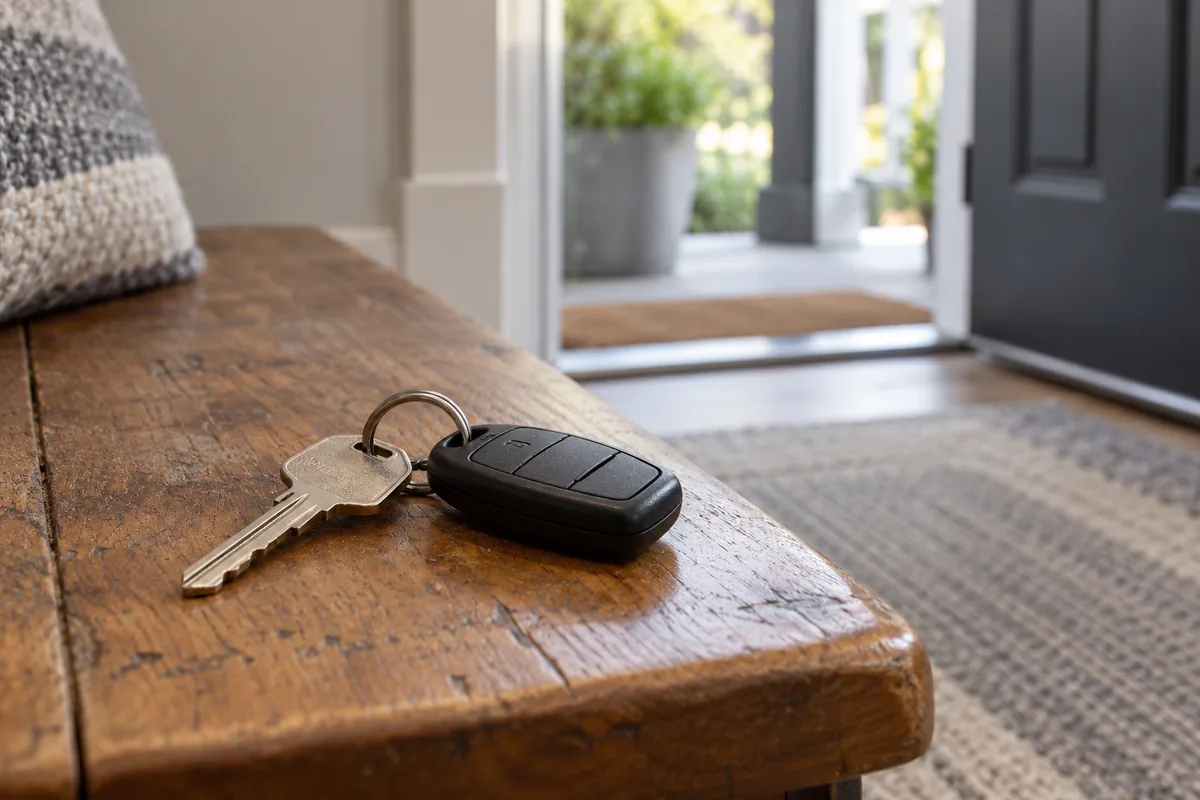
Begin with the keys you cannot account for
A former occupant, an old staff key or a missing spare can leave you unsure who still has access. Write down which doors those keys could open. A rekey applies to the cylinders included in the work; it does not change an overlooked side entrance. If you do not know which key operated which door, explain that uncertainty instead of treating the whole property as one lock.
What a rekey actually changes
The cylinder is the part where the key goes. In suitable hardware, its internal arrangement can be changed to accept a different key. The old operating key should then stop working in that cylinder. The handle and visible trim may stay in place. A rekey does not correct a door that drags or a latch that misses its opening; those symptoms belong in a repair discussion.
Bring the whole key arrangement into view
Say whether a working key remains and whether several doors currently share it. Locks from different systems may not be able to use a single new key. Ask what is compatible before choosing parts or promising everyone the same spare. For a home move, the key inventory guide can help. For a business, include the authorized person responsible for distributing staff keys.
Make the handover part of the plan
Decide how many people need the new key and who will receive it. Confirm which cylinders are covered, how many keys are included and how the work will be checked. Include any stiffness or damage in the original description. Before agreeing to the estimate, ask whether that concern changes the suggested work. Set old keys aside clearly so they do not get mixed back into daily use.