
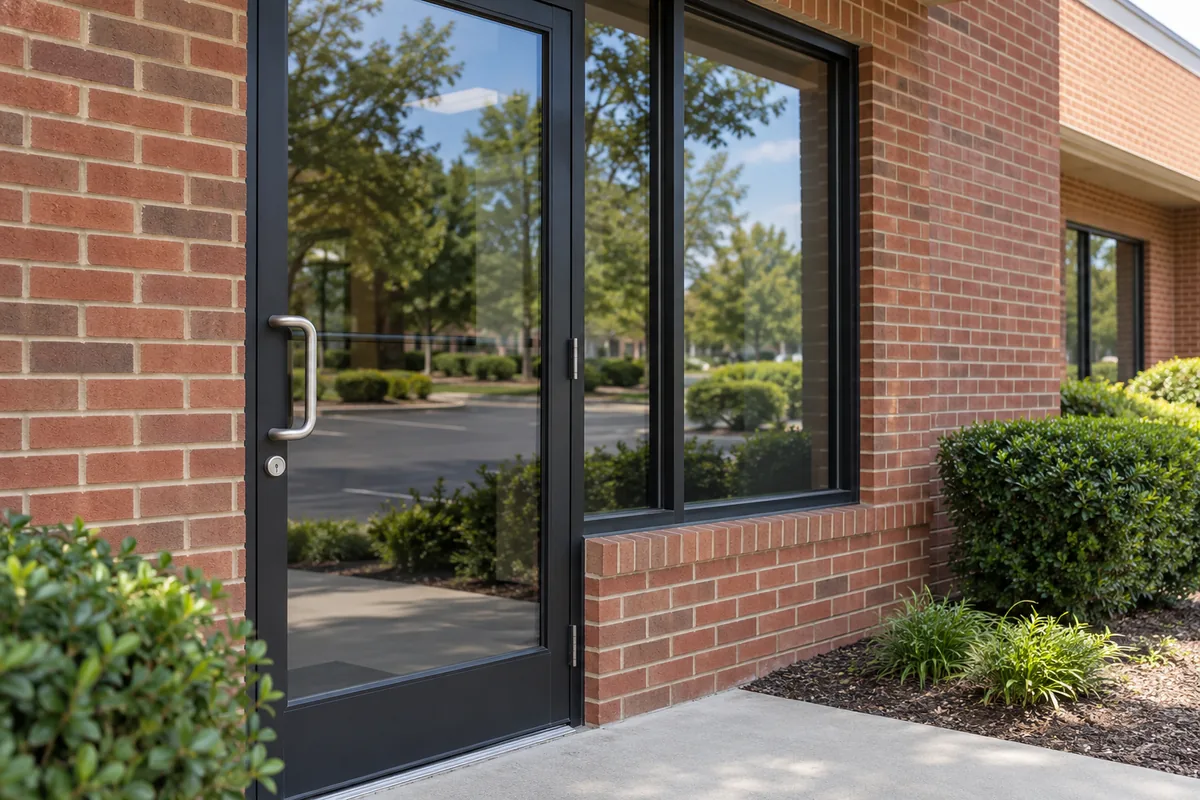
Name the door within the business
The address may contain a storefront, an upstairs suite and a rear staff entrance. Specify which one needs attention and whether people can still enter and leave normally. Along the Eastern Boulevard corridor, the visible shopfront may not be the entrance used from parking. Include a unit number or door side. The entrance guide helps separate a public business name from the actual place requiring work.
Separate the fault from the keyholders
A loose handle or a door that will not latch needs a description of its behavior. A departing employee’s missing key raises the question of who can still unlock the door. Here, rekeying means changing the operating key in suitable locks; it does not imply installing an electronic access system. If both concerns apply, discuss them together so a repair does not leave the key issue unresolved.
Bring the responsible people into the decision
A tenant, building owner and property manager may each control different parts of an entrance. Confirm who can approve changes, including any shared door used by other occupants. Have an authorized contact available to discuss the scope and estimate. Keep exit paths unobstructed while the issue is considered, and avoid improvising a temporary arrangement that prevents normal safe exit. A phone description alone cannot determine the condition of unfamiliar hardware.
Set out a manageable handover
List the doors included and who should receive keys afterward. Say whether retaining visible hardware or an existing key arrangement is a preference. Support depends on the actual lock and condition, so check the particular request rather than assuming every commercial device is covered. Ask what the estimate includes, how any change will be approved and how the affected entrance will be checked before the work is complete.