
Which opening do you mean?
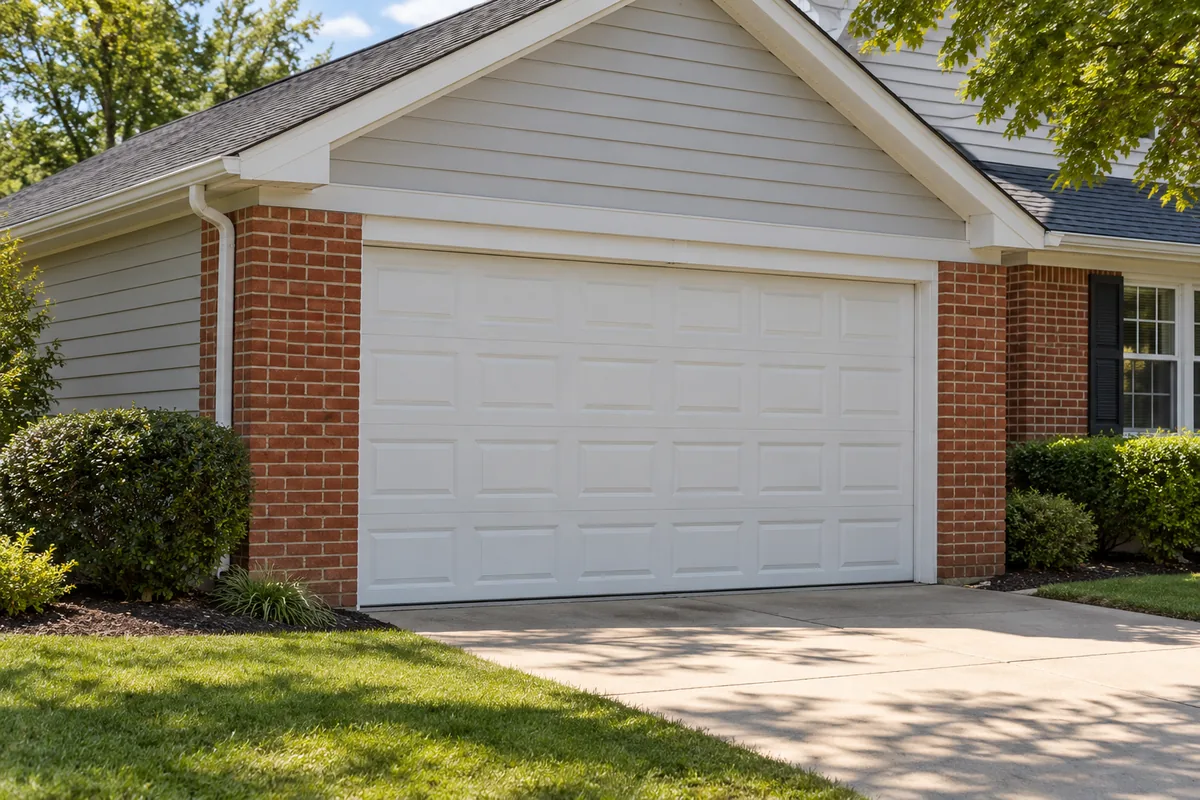
Begin with the large overhead door or the ordinary door you walk through. If it is the walking entrance, describe the key, handle and latch as you would for any door lock problem. If it is the overhead door, say whether it is open, closed or somewhere between. Mention whether the garage belongs to one property or is a shared entrance managed by someone else.
Knowing that a vehicle is inside can help explain the situation. It is not a reason to push through a partly open door or attempt to lift damaged equipment.
Use observations you already have
Tell us what happened on the last normal attempt: no response, a brief movement, reversal or an unusual noise. Say which control you were using and whether another control had already behaved differently. You do not need to run the door repeatedly to collect more evidence. A remote issue and a movement problem may need different consideration, and neither can be fully diagnosed from a short description.
Keep clear of a crooked or partly open door. Leave cables, springs and unfamiliar release mechanisms alone. These are not suitable parts to adjust while trying to describe a fault.
Ask about the repair that fits
Have the property address ready and share any equipment information you can read safely without climbing or entering a hazardous area. Through the garage door repair page, you can organize the description before checking the specific repair capability and current availability by phone.
Ask what needs assessing, what the estimate covers and how a change in the proposed work will be approved. This website’s established garage service is repair; a new door installation or industrial-door project needs separate confirmation and is not an offered scope here. You should leave the call knowing what request is being considered, rather than having to choose a part yourself.